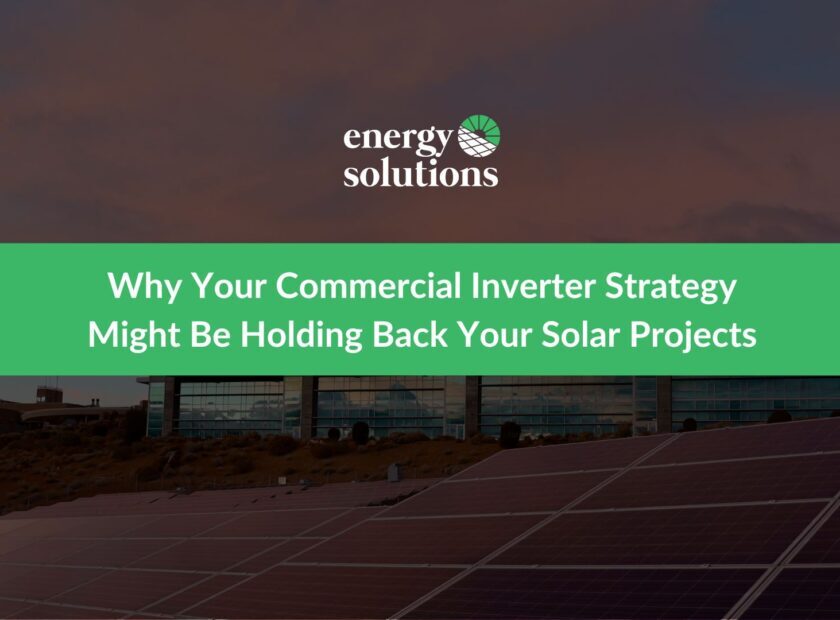
When planning a commercial solar project, most installers and developers focus heavily on panel quality, racking, and layout. But one critical component often gets overlooked—or chosen based on price alone: the inverter.
Your inverter strategy may be the silent bottleneck that’s limiting system performance, causing unnecessary service calls, or impacting your ability to scale.
The Real-World Cost of Poor Inverter Choices
- Mismatch with Project Requirements
Not all inverters are designed the same. Choosing an inverter without understanding the voltage window, string sizing flexibility, or grid requirements can lead to compromised system output or even failures. - Installation Complications
Inverters that are not designed with installer-friendliness in mind can increase labor hours, lead to improper setup, or force on-site design changes. - Lack of After-Sales Support
Commercial-scale projects need responsive support. When inverters fail or underperform, a slow or unhelpful support process can lead to extended downtimes and unhappy clients. - Limited Monitoring or Data Visibility
Without clear performance insights, long-term O&M becomes more reactive than proactive, affecting everything from ROI to customer satisfaction.
Key Industry Data to Highlight
1. Inverters are the most failure-prone component
A 2022 survey of photovoltaic installations found that inverters were the most frequently failing component—occurring in 54% of reported failures—significantly more than panel issues (18%) or mounting systems (14%) Link to source.
2. String inverter failure rates spike early
According to insurance claims data, string inverters experience a failure rate of approximately 0.89% within the first two years—nearly 10 times higher than microinverters (0.055%) Link to source. This early failure cluster underscores the importance of quality installation and commissioning processes.
3. Inverter faults lead to long downtimes and high costs
At utility and commercial solar farms, inverter-related incidents account for about 17% of total failures, with an average downtime of 80 days and a revenue loss around $49,400 per event Link to source.
4. 62% of inspected commercial projects had major issues in DC systems
In a report covering 100 kW–350 MW commercial projects, 91% of critical failures were traced to DC distribution—underscoring the importance of compatible inverter setup during selection and installation Link to source.
5. Residential string inverter TTF confirms repair necessity
A study of 2,121 inverters in residential systems found 34.3% had yield-relevant faults within 15 years—an important reminder that even well-chosen inverters require ongoing maintenance and monitoring Link to source.
Why It Matters for C&I Solar Installers
| Risk | Impact | Solution |
|---|---|---|
| High failure rates | Early downtime and costly repairs | Strict commissioning, high-quality installers, and warranty planning |
| Long repair times | Reduced ROI and unhappy clients | Select reliable brands and ensure local support |
| DC system faults common | Performance losses and safety risks | Ensure proper compatibility and design best practices |
So What Can You Do?
Rethink your inverter strategy.
It’s no longer just about efficiency ratings or price per watt. It’s about choosing solutions that offer reliability, flexibility, support, and are backed by real-world performance.
Join the Conversation: Upcoming Webinar Designed to Tackle Your Challenges
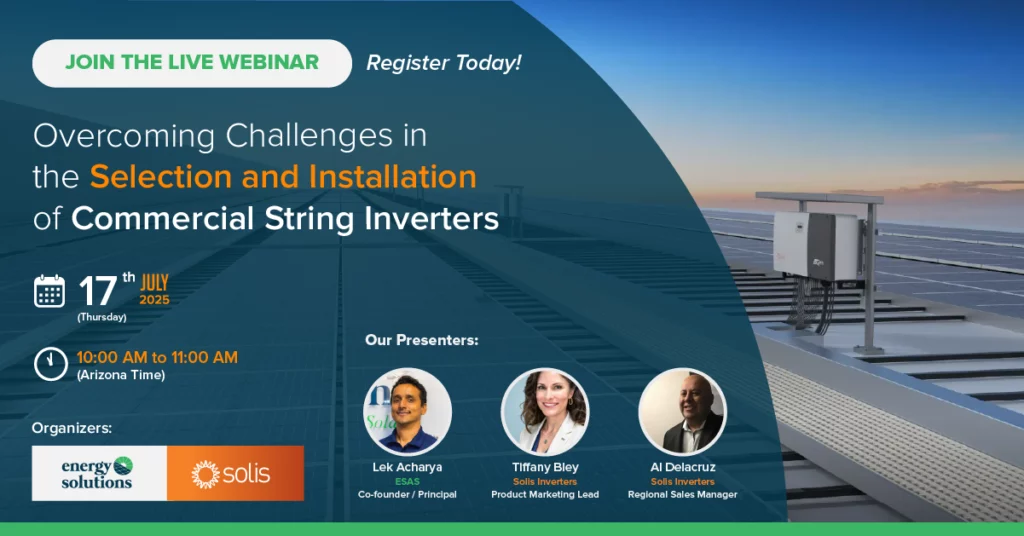
We’re bringing this discussion to the forefront in our upcoming free webinar: Get expert guidance before your next project:
Overcoming Challenges in the Selection and Installation of Commercial String Inverters with Solis
📅 Date: Thursday, July 17, 2025
🕙 Time: 10:00 AM – 11:00 AM (Arizona Time)
📍 Location: Online
Speakers:
- Lek Acharya, Co-founder / Principal, ESAS
- Tiffany Bley, Product Marketing Lead, Solis Inverters
- Al Delacruz, Regional Sales Manager, Solis Inverters
🎁 Bonus: Lucky participants will win $50 gift cards!
👉 Register now to save your spot.
In this session, we’ll unpack real installer challenges, address the most common pain points in C&I inverter projects, and share practical solutions. Whether you’re a project manager, EPC, or solar installer, this webinar will provide valuable takeaways to elevate your next installation.
Inverter issues don’t have to stall your projects. Join us on July 17 to discover smarter strategies that protect your systems, streamline performance, and boost your ROI.
Stay connected with us on LinkedIn, Facebook, Instagram, and YouTube for the latest updates.