
Table of Contents
Executive Summary: The Key to C&I Profitability
Right-sizing a Battery Energy Storage System (BESS) is the single most critical factor determining the financial success of a commercial solar project. The goal is not to sell the biggest battery but to find the optimal point where avoided utility charges and revenue generation outweigh the system cost over its projected lifespan.
This framework provides developers with a structured, four-phase approach to move from load data analysis to final, bankable BESS sizing.
Phase 1: Define the Problem – Why BESS?
Before sizing begins, developers must define the primary financial and operational purpose of the BESS. This decision determines the necessary Power (kW) and Energy (kWh) ratio.
A. Define the Primary Value Stream
| Value Stream | Primary Metric (Determines Sizing) | Key Data Needed |
|---|---|---|
| Peak Shaving (Demand Charge Reduction) | Power (kW) rating needed to prevent monthly peak spikes | 15-minute interval load data (≥12 months), utility tariff structure |
| Time-of-Use (TOU) Arbitrage | Energy (kWh) duration needed to cover high-cost rate windows | TOU schedule (times and prices), daily load profile |
| Resilience / Backup | Energy (kWh) duration needed for critical loads (autonomy) | Critical load profile, required hours of autonomy (e.g., 4, 8, 24 hours) |
B. Demand Charge Focus
For most commercial and industrial (C&I) projects, Peak Shaving is the priority. The sizing goal is to identify:
- Peak Shaving Target (kW): Difference between historical peak demand and desired peak.
- Duration (kWh): Length of time the battery must sustain discharge to cover the entire peak event.
Phase 2: Technical and Operational Constraints
Optimal sizing is meaningless if the system is technically infeasible or violates safety codes. Constraints set the upper and lower boundaries for design.
A. Power Capacity Constraints (kW)
- Interconnection Limit: Maximum allowable capacity at the Point of Common Coupling (PCC). Often the hard upper limit for inverter size.
- Inverter & PCS Sizing: The Power Conversion System (PCS) must align with the chosen solar inverter or standalone PCS.
- Physical Space: A 1 MW BESS may require 3–50 m² and must adhere to fire code and setback regulations.
B. Energy Capacity Constraints (kWh)
- Degradation: Battery capacity fades over time due to calendar and cycling aging. Size to End-of-Life (EOL) capacity guarantee, not initial nameplate capacity.
- Solar Availability (Hybrid Systems): If the BESS relies on solar for charging, size to store excess PV energy, not just meet load.
Phase 3: Financial Optimization Loop
Translate technical design into financial performance through iterative modeling.
A. Core Optimization Metric
Maximize Net Present Value (NPV) or minimize Levelized Cost of Storage (LCOS):
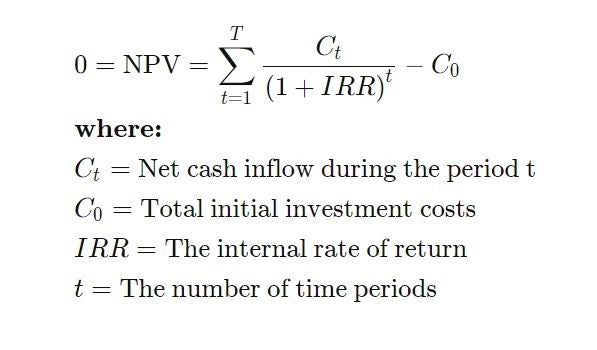
- Cash Inflows: Avoided demand charges, TOU savings, capacity payments, ITC incentives.
- Cash Outflows: CAPEX, O&M, battery replacements.
B. Iterative Scenario Modeling
Test discrete battery sizes (e.g., 500 kW / 2 MWh, 750 kW / 3 MWh, 1 MW / 4 MWh) against historical load data. The optimal size is typically smaller than the technical maximum, capturing the most valuable peaks at the lowest cost.
C. Factor in Financial Incentives
The 30% Investment Tax Credit (ITC) reduces CAPEX, allowing for a slightly larger system while maintaining the same net cost to the customer, improving overall financial viability.
Phase 4: Sizing Best Practices Checklist
| Action Item | Description | Risk Mitigation |
|---|---|---|
| Data Integrity | Use 12–24 months of 15-minute interval load data to capture seasonal peaks | Prevents under-sizing due to non-representative billing cycles |
| Future Proofing | Design PCS & BOS for final expected size; consider modular expansion | Lowers initial CAPEX while enabling growth and new revenue streams |
| Warranty Check | Ensure chosen size & duty cycle match battery warranty | Protects financial guarantees and minimizes operational risk |
| Dispatch Strategy | Pair with a sophisticated EMS for load forecasting & peak prediction | Guarantees BESS performs the task it was sized for |
Conclusion:
Right-sizing a BESS for commercial facilities is a delicate balance of technical feasibility, operational strategy, and financial optimization. By following this structured four-phase framework, developers can maximize project ROI, ensure system reliability, and future-proof installations for evolving energy markets.
Quick FAQs: Understanding BESS Right-Sizing
1. What does “right-sizing” a BESS mean?
Designing a battery with the optimal kW/kWh balance so savings and revenue outweigh total system cost.
2. Why is proper sizing important?
Oversizing wastes capital; undersizing limits financial performance. Correct sizing maximizes ROI and ensures the system does its job.
3. What data is needed to size a BESS?
12–24 months of 15-minute interval load data, utility tariffs, TOU rates, and critical load requirements.
4. How does a BESS save money?
Through peak shaving, TOU arbitrage, solar self-consumption, and backup support.
5. What’s the difference between kW and kWh?
kW = power (how fast the battery discharges).
kWh = energy (how long it can discharge).
6. Does battery degradation matter?
Yes. Systems must be sized to meet performance targets at end-of-life, not at installation.
7. Can BESS work without solar?
Yes. Storage can operate standalone, though pairing with solar often improves economics.
8. What incentives apply?
Most C&I systems qualify for the 30% ITC, plus possible local/state incentives.
9. How long does accurate BESS sizing take?
Typically 1–3 weeks for standard commercial projects.
10. Can Energy Solutions and Supplies LLC help size my BESS?
Absolutely, ESAS (Energy Solutions and Supplies LLC) offers free initial consultations to review your load data and identify the ideal system size.
Further Reading & Resources
- NREL – Commercial Battery Storage Fundamentals
https://www.nrel.gov/docs/fy20osti/74426.pdf - U.S. Department of Energy (DOE) – Energy Storage Overview
https://www.energy.gov/eere/energy-storage - Sandia National Laboratories – Energy Storage Systems (ESS) Safety & Best Practices
https://www.sandia.gov/ess/ - OpenEI Utility Rate Database – For Tariffs & Demand Charge Research
https://openei.org/wiki/Utility_Rate_Database - DSIRE – Incentives for Solar + Storage (ITC, state programs)
https://www.dsireusa.org/