2026 Top Electric Vehicle Charger Wall Plug Options?
As electric vehicles (EVs) become increasingly popular, choosing the right Ev Charger Wall Plug is crucial. The market offers various options, each with its own benefits and limitations. Understanding these differences can be challenging, especially for new EV owners.
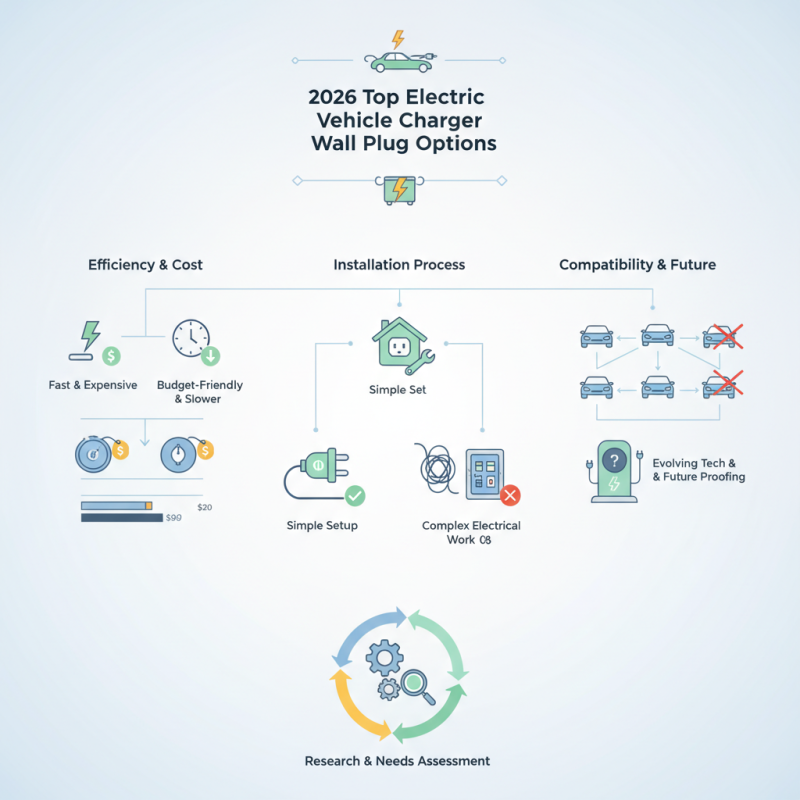
The efficiency of an EV charger wall plug can greatly affect charging times. Some models charge quickly but can be expensive. Others are budget-friendly but may take longer to power your vehicle. It is important to find a balance that fits your lifestyle. Many consumers overlook the installation process, which can complicate their choices. Installation can range from simple to complex, depending on your home's electrical setup.
Additionally, not all chargers are compatible with every EV model. This aspect creates confusion, often leading to unsatisfactory purchases. Thinking critically about your needs is essential. The electric vehicle market is evolving, and the future promises even more advancements in charging technology. It is worth taking the time to research and reflect on which EV charger wall plug aligns best with your requirements.
Key Factors Influencing Electric Vehicle Charger Wall Plug Selection
When choosing an electric vehicle (EV) charger wall plug, several key factors come into play. Charging speed is one of the most critical aspects. According to the U.S. Department of Energy, Level 2 chargers can deliver power levels between 3.3 kW to 19.2 kW, which significantly reduces charging time compared to standard Level 1 chargers. However, selecting the right charging speed must account for the home's electrical capacity. Not every home can handle the higher output of faster chargers.
Another important factor is compatibility. Not all charging plugs fit all EV models. Some vehicles require specific connectors or adapters. A study by the International Council on Clean Transportation found that 40% of EV users had faced compatibility issues with available charging stations. This can create a frustrating experience for users and lead to delays in charging.
Cost is also a significant factor in the decision-making process. The initial investment can vary widely. Research shows that the installation of a Level 2 charger typically ranges from $800 to $1,500, depending on the installation complexity and parts needed. Many homeowners might overlook the long-term savings on fuel and maintenance when considering upfront costs.
Overview of Charging Standards and Compatibility for 2026
As electric vehicles (EVs) gain popularity, charging standards play a pivotal role. The International Electrotechnical Commission (IEC) predicts that by 2026, over 50% of new vehicles will be electric. This shift demands robust infrastructure to support diverse charging needs.
Three major charging standards are shaping the landscape: CCS, CHAdeMO, and Tesla’s proprietary system. CCS, or Combined Charging System, boasts a wide adoption rate, allowing three-phase charging. It supports fast charging rates typically exceeding 150 kW. According to a report from the Electric Power Research Institute, CCS connectors are expected to account for 80% of all public charging stations by 2026.
However, compatibility issues remain a concern. CHAdeMO, popular in certain markets, struggles with its limited presence in North America. Users often find it challenging to locate compatible stations. Adoption of universal connectors is essential to prevent consumer frustration. As the EV market evolves, ensuring smooth interoperability across charging systems will be critical for widespread adoption. The current landscape invites reflection on how to balance innovation with user experience.
Performance Metrics: Charging Speed and Efficiency in 2026 Options
As we approach 2026, electric vehicle (EV) charging options are expanding rapidly. Charging speeds are a critical component for any EV owner. Most chargers are now targeting a rapid charging rate, enabling drivers to replenish their batteries in record time. The latest models can charge an EV to about 80% capacity in just 30 minutes, a remarkable feat compared to older models.
However, efficiency is also paramount. Many wall plug options now feature smart technology. This helps optimize energy use and reduces costs. Some systems even allow for real-time monitoring. Drivers can track their power consumption and adjust as needed. Despite these advancements, some chargers can be tricky to install and may require professional help. Not every user finds them intuitive.
Moreover, charging infrastructure varies widely by location. Some urban areas enjoy fully equipped charging stations, while others struggle. This disparity can frustrate potential EV owners. As the market evolves, manufacturers must prioritize user experience alongside technological advancements. Better communication of these features could help bridge the gap. The journey toward convenient charging has hurdles yet to overcome.
2026 Top Electric Vehicle Charger Wall Plug Options - Performance Metrics
This chart displays the charging speed (in kW) and efficiency (in %) of various electric vehicle charger wall plug options in 2026. The data showcases the performance metrics that are essential for consumers to consider when choosing a wall plug charger for their electric vehicles.
Cost Analysis: Comparing Pricing Among Top Electric Vehicle Chargers
When choosing a home electric vehicle charger, costs can vary widely. The price may range from a few hundred to over a thousand dollars. Factors like installation and features impact overall expenses significantly. A basic level 2 charger may be less, but advanced options with smart technology can cost much more.
**Tips:** Research the installation fees. They can add substantial costs that you may not expect. Always factor in your specific electrical needs. A more powerful charger isn't just a higher price; it might require additional electric work.
Consider rebates or incentives in your area. Some governments encourage EV usage through financial support. This can help offset sticker shock. Collecting bids from multiple electricians can also lead to better prices.
When evaluating options, check user reviews. They often reveal valuable insights about performance and reliability. Look for chargers with durable materials and solid warranties. Choosing wisely now may save money in the long run. Remember, not every high-priced charger delivers excellent value. So, analyze carefully before making a final decision.
2026 Top Electric Vehicle Charger Wall Plug Options - Cost Analysis
| Charger Type | Voltage (V) | Current (A) | Charging Speed (kW) | Average Cost ($) |
| Level 1 Charger | 120 | 15 | 1.8 | 300 |
| Level 2 Charger | 240 | 30 | 7.2 | 500 |
| DC Fast Charger | 480 | 125 | 60 | 15000 |
| Wireless Charger | N/A | N/A | 3.5 | 2000 |
Future Trends in Electric Vehicle Charging Technology and Infrastructure
The electric vehicle (EV) charging landscape is rapidly evolving. According to a recent report, the global EV charging market is expected to reach $140 billion by 2030. Innovations in charging technology are driving this growth. Wireless charging, for instance, offers new convenience but is still in its infancy. The efficiency of wireless systems often lags behind traditional methods, posing challenges for widespread adoption.
Infrastructure upgrades are equally essential. Many urban areas struggle with the current charging capacity. Some studies suggest that over 70% of potential EV users cite inadequate charging infrastructure as a barrier. Accessibility remains a significant issue, especially in rural regions. Expanding the network of fast chargers is crucial but fraught with logistical challenges.
Battery technology is another area of focus. Solid-state batteries promise faster charging times and longer lifespans. Yet, production costs remain high. This limits their immediate availability. Furthermore, recycling EV batteries poses environmental concerns. Better solutions are needed to address these challenges. Industry stakeholders must collaborate to ensure that charging technology and infrastructure keep pace with EV growth.