Top Home Solar Innovations Transforming Renewable Energy Solutions?
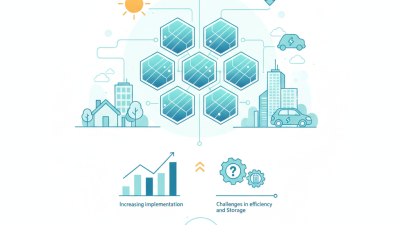
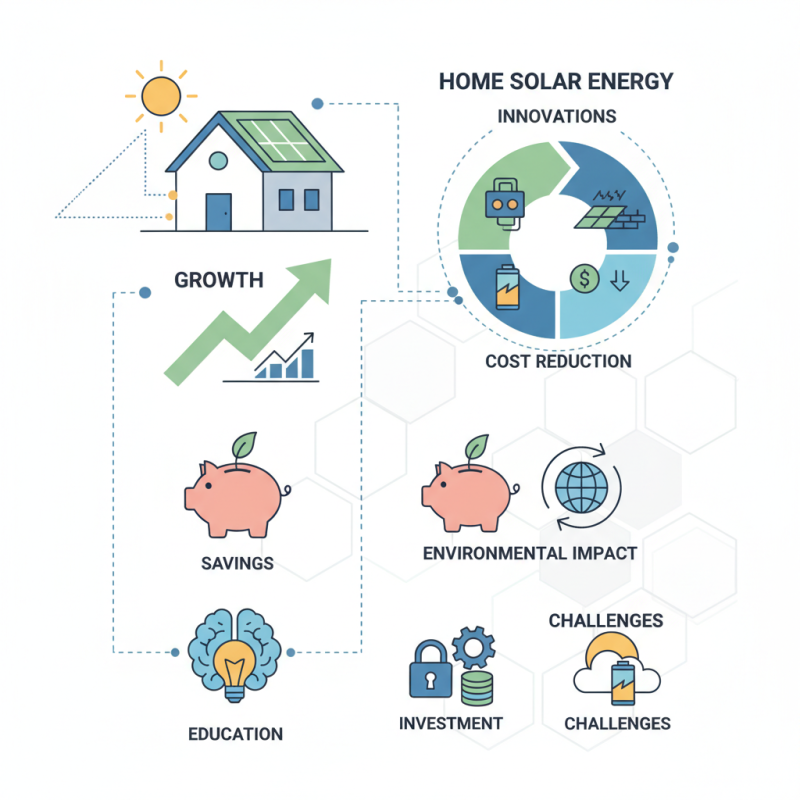
The growth of home solar technology is reshaping the energy landscape. According to the Solar Energy Industries Association (SEIA), U.S. residential solar capacity grew by 20% in 2020, reaching over 100 gigawatts. Homeowners are increasingly turning to solar power as a viable alternative to traditional energy sources. Innovations, like microinverters and solar roof tiles, are making systems more efficient and aesthetically pleasing.
Yet, challenges remain. The initial investment can be a barrier, with average costs ranging from $15,000 to $25,000 before incentives. Moreover, the intermittent nature of solar energy calls for better storage solutions. Battery technology has advanced, but pricing and access are still concerns for many households.
Despite these hurdles, the shift towards home solar is crucial. It not only reduces electricity bills but also decreases carbon footprints. As more people adopt home solar systems, energy independence becomes more achievable. However, education on these systems continues to be essential. Understanding both the benefits and limitations is key to making informed decisions.
Emerging Solar Technologies Revolutionizing Energy Efficiency
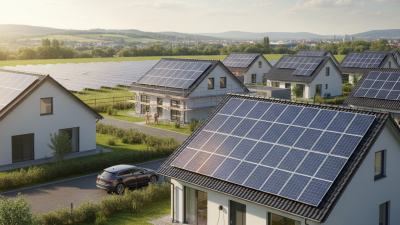
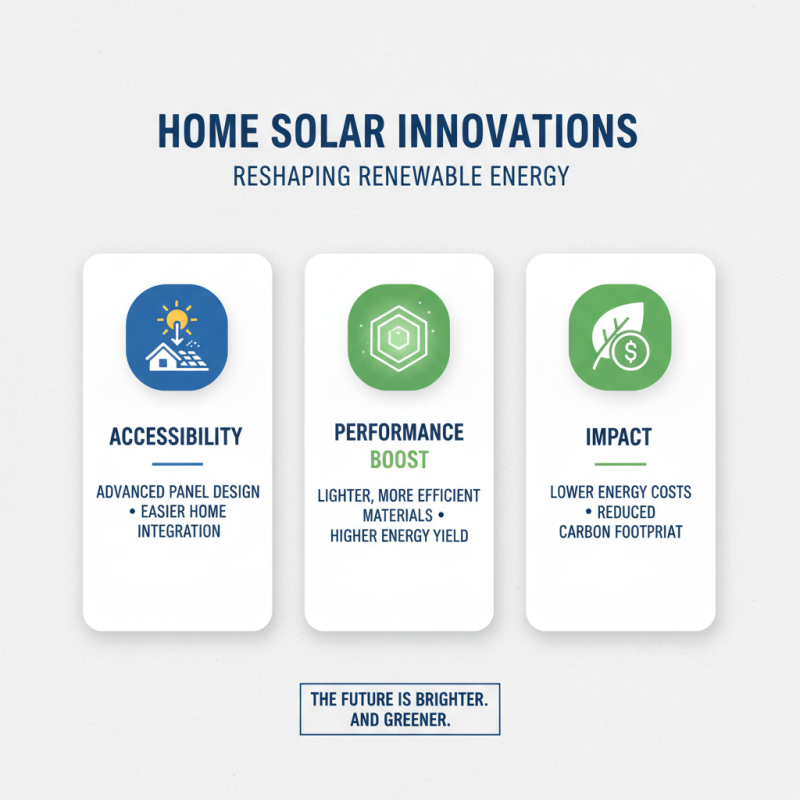
The emergence of new solar technologies is changing how we think about energy efficiency. Solar panels are no longer the only option. Today, innovations like solar shingles and transparent solar cells are making waves. These products blend seamlessly with architecture while generating power. They promise to make solar energy more accessible for homeowners.
Tip: Consider the orientation of your roof. This can maximize energy absorption. Solar shingles work best on homes with south-facing roofs. The overall look can be enhanced, as they reflect modern design trends.
Energy storage options are also improving. Home battery systems can store solar energy for later use. This helps homeowners rely less on the grid. Some systems even allow you to monitor energy production in real time. Yet, the costs can be high, and not every home may benefit equally from these options. It’s important to assess whether the investment aligns with your energy needs.
Tip: Research local incentives. They can help offset installation costs. Evaluate your home’s specific energy demands before making changes. Focusing solely on aesthetics might lead to underperformance. A balance between efficiency and design is essential.
Innovative Energy Storage Solutions for Residential Solar Systems
Innovative energy storage solutions are essential for maximizing the benefits of residential solar systems. As reported by the National Renewable Energy Laboratory, effective storage can increase energy efficiency by up to 30%. This translates to more savings on electricity bills and reduced reliance on the grid. Homeowners can store excess solar energy generated during the day and use it at night or during cloudy weather.
Battery technology continues to evolve rapidly. Lithium-ion batteries dominate the market but face challenges like high costs and limited lifespan. New alternatives, such as solid-state batteries, show promise with improved energy density and safety. According to a report by Wood Mackenzie, the global energy storage market is expected to reach 1,095 gigawatt-hours by 2030, highlighting the increasing demand for effective solutions.
Yet, energy storage is not without drawbacks. Installation can be complex, and upfront costs may deter some homeowners. Additionally, many systems require regular maintenance. These challenges urge homeowners to carefully consider their specific energy needs before investing. Reliance on advanced technology may also lead to challenges in recycling and environmental impact. Industry experts recommend a balanced approach to evaluating energy storage options.
Smart Home Integration with Solar Power for Enhanced Performance
Smart home integration with solar power is becoming more popular. Many homeowners are now seeking ways to enhance their energy efficiency. With modern technology, solar panels can connect to home automation systems. This connection allows homeowners to monitor and control their energy usage in real-time.
Imagine a system that adjusts your energy consumption based on sunlight availability. During peak sunlight hours, your home can prioritize solar energy. However, not all systems are foolproof. Sometimes, syncing issues arise between devices. This can lead to inefficiencies, where solar energy isn't fully utilized.
Home energy management systems can optimize usage further. They can learn patterns in energy consumption. For instance, if certain appliances use more power during the day, the system may schedule their operation accordingly. But, such technology may still require user input for maximum effectiveness. Homeowners must remain engaged to ensure optimal performance. Integrating smart tech with solar power holds great potential, yet it still faces challenges that need addressing.
Top Home Solar Innovations Transforming Renewable Energy Solutions
| Innovation |
Description |
Benefits |
Integration with Smart Home |
| Bifacial Solar Panels |
Solar panels that capture sunlight from both sides, enhancing energy capture. |
Higher energy yield, better performance in low-light conditions. |
Can be integrated with home management systems for optimized energy distribution. |
| Energy Storage Systems |
Batteries that store excess solar energy for use during non-sunny periods. |
Increased energy independence, minimizes reliance on the grid. |
Smart monitoring allows for real-time usage data and automation. |
| Solar Tracking Technology |
Systems that adjust the angle of solar panels throughout the day to maximize exposure. |
Significant increase in energy production compared to stationary panels. |
Integrates with smart systems to optimize energy collection based on usage forecasts. |
| Building-Integrated Photovoltaics (BIPV) |
Solar panels integrated into building materials like roofs and windows. |
Aesthetic appeal and productive use of building surfaces for energy generation. |
Works seamlessly with smart home designs for efficient energy use in architecture. |
| Smart Inverters |
Devices that convert DC output of solar panels to AC and optimize energy flow. |
Improved efficiency and reliability of solar systems. |
Can communicate with home automation systems for optimized energy usage. |
Cost Reduction Trends in Home Solar Installations and Energy Production
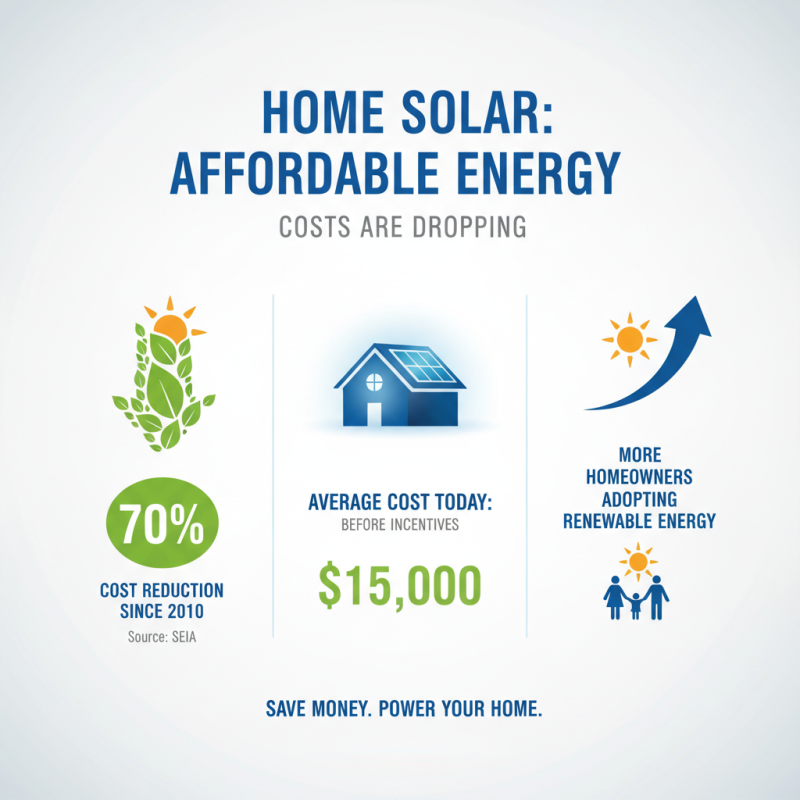
Cost reduction is a key trend in home solar installations. According to the Solar Energy Industries Association (SEIA), the average cost of solar systems has dropped by about 70% since 2010. This significant decrease encourages homeowners to adopt renewable energy solutions. Today, the average price for a residential solar panel system is around $15,000 before incentives.
Moreover, advancements in technology play a vital role in energy production. High-efficiency solar panels can now convert over 22% of sunlight into electricity. This means homeowners need fewer panels to meet their energy needs. Many users report reduced electricity bills, with savings averaging between 20%-50%.
Despite these advancements, challenges remain. Not everyone can afford the upfront costs, even with incentives. Additionally, energy output can fluctuate based on weather and location. Homeowners must carefully evaluate their needs before making a decision. A thoughtful approach toward these innovations is necessary for sustainable energy adoption.