How to Get Started with Solar Installation at Home?
Solar installation at home can transform how you use energy. With rising electricity costs and environmental concerns, many homeowners seek sustainable solutions. This shift to solar energy offers financial benefits and a lower carbon footprint.
Getting started is not always straightforward. There are various factors to consider. These include costs, local regulations, and system types. Each decision impacts overall efficiency and savings. Sometimes, people overestimate their DIY skills, leading to costly mistakes. It’s essential to research and consult professionals.
Homeowners may feel overwhelmed by the initial steps. However, understanding the basics can simplify the process. Gathering information about potential solar providers is crucial. You should also evaluate your home’s suitability for solar panels. These considerations will pave the way for successful solar installation, enabling you to harness the sun’s power for a greener future.

Understanding the Basics of Solar Energy for Home Use
Understanding solar energy for home use is essential for anyone considering a solar installation. Solar energy harnesses sunlight and converts it into electricity. This process involves solar panels, an inverter, and a battery storage system. Solar panels are installed on rooftops or in gardens. They capture sunlight and produce electricity, reducing reliance on the grid.
When starting your solar journey, consider a few tips. Assess your energy consumption. Look at your utility bills to determine how much energy you use monthly. This information guides your system size. Choosing the right solar technology is crucial. Photovoltaic and solar thermal systems serve different needs. Be aware that installation costs can vary widely, so plan a budget accordingly.
It's also important to consult with professionals. They can help evaluate your property’s solar potential. Check for any shading issues from trees or buildings. A shaded panel generates less energy. Regular maintenance is necessary, though some people overlook this. Periodic cleaning and inspections keep your system efficient. Solar energy is a great investment, but it requires thought and planning.
Evaluating Your Home's Suitability for Solar Installation
Evaluating your home for solar installation begins with assessing its sunlight exposure. Roof direction matters greatly. South-facing roofs typically receive the most sunlight. A clear view of the sky is essential. Trees or buildings that cast shadows can significantly reduce efficiency. Look around your property. Identify any obstructions that might block sunlight during peak hours.
Next, consider the roof's age and condition. An aging roof may need repairs or replacement before panels are installed. Check for leaks, and ensure it is structurally sound. Your roofing material also plays a role in installation feasibility. Some materials are better suited for solar than others. Metal roofs often provide easier installation than tiled ones.
Finally, think about your energy needs. How much energy do you consume? Reviewing past utility bills can give you a clearer picture. It helps to identify how much savings could be achieved with solar. If you plan to expand your energy usage in the future, factor that in as well. This reflection can reveal if solar is a true fit for you.
Solar Installation Suitability Evaluation
Choosing the Right Solar Panels and Equipment for Your Needs
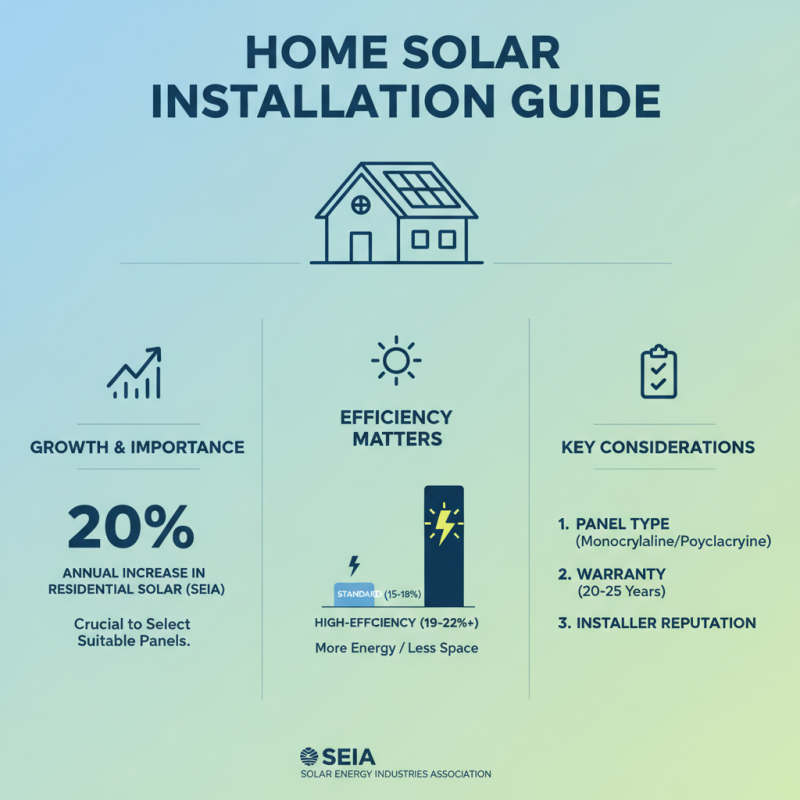
When considering solar installation at home, choosing the right solar panels and equipment is crucial. The Solar Energy Industries Association (SEIA) reports that residential solar installations have increased by 20% annually. This growth highlights the importance of selecting suitable panels. Not all solar panels are created equal. Efficiency rates can vary significantly. Most panels fall between 15% and 22%. Higher efficiency panels can produce more energy in less space.
Tip: Assess your energy needs before purchasing. Calculate your average energy consumption to determine the right panel capacity. Look for equipment that offers a good warranty, typically 25 years for panels and 10 years for inverters.
When researching solar equipment, consider your local climate and property layout. Not ideal conditions can affect performance. Shade from trees or buildings can reduce energy production. Price is also a factor. Though upfront costs can be high, consider potential savings on energy bills. The U.S. Department of Energy estimates that homeowners can save $30,000 over 20 years.
Tip: Consult with local solar installers for customized advice. They can help you understand local incentives and rebates. Take your time evaluating your options to avoid costly mistakes. Choosing wisely can lead to long-term benefits and a better return on investment.
Steps to Hire a Qualified Solar Installation Contractor
When considering solar installation at home, hiring a qualified contractor is crucial. Start by researching local solar companies. Look for reviews and ask for recommendations from friends or family. A qualified contractor will guide you through the complexities of installation, financing, and local regulations. Check their credentials and certifications to ensure they meet industry standards.
Don’t hesitate to interview multiple contractors. Ask them about their experience and completed projects. It’s essential to understand their installation process. Some contractors may use sub-contractors, which can affect quality. Be wary of those who offer unrealistic timelines or prices. Obtain detailed estimates and compare them. Pay attention to warranties offered. They can vary significantly.
As you narrow down your choices, consider their communication style. A good contractor will answer your questions clearly. They should also be transparent about potential challenges during installation. Trust your instincts—if something feels off, it probably is. Revisit your budget and clarify any terms. Taking time to reflect will help prevent future regrets.
Understanding the Financial Aspects and Incentives for Solar Installation
When considering solar installation, understanding financial aspects is crucial. Many homeowners hesitate due to high upfront costs. However, incentives can significantly offset these expenses. For instance, the Federal Investment Tax Credit (ITC) allows homeowners to deduct 26% of their solar installation costs from federal taxes. This incentive will reduce to 22% in 2023, highlighting the urgency for those considering solar at home.
Financing options also play a vital role. Some homeowners opt for solar loans because they allow immediate financing without upfront costs. According to the Solar Energy Industries Association (SEIA), solar installations increased by 43% in 2020, largely driven by accessible financing. Still, many overlook improving their credit before applying. This can lead to higher interest rates, thus affecting overall savings.
Additionally, state programs may offer additional tax credits or rebates. For instance, California residents can benefit from various local incentives, reducing net costs considerably. However, eligibility often requires thorough documentation, which can be time-consuming. Potential solar adopters should weigh these factors carefully to maximize their investment. Navigating the financial landscape can be complex, but the long-term savings make it worthwhile.