What is a Commercial Solar Panel and How Does It Work?
The increasing demand for sustainable energy solutions has led to a surge in the adoption of commercial solar panels. According to the Solar Energy Industries Association (SEIA), solar energy capacity in the United States has grown by over 167% since 2010. This growth signifies a shift towards greener technologies. Commercial solar panels, designed specifically for businesses, play a crucial role in this transition.
Commercial solar panels convert sunlight into electricity. They harness the sun's energy, which can significantly reduce operational costs for businesses. A study from the National Renewable Energy Laboratory (NREL) highlights that installing a commercial solar power system can cut energy expenses by 75%. Yet, despite the proven advantages, many businesses hesitate. Some are concerned about initial costs and installation challenges. It's essential to recognize these hesitations.
The technology behind commercial solar panels is consistently evolving, making it accessible to a broader range of industries. As innovations continue, the efficiency and affordability of these systems improve. Companies must evaluate their specific needs and situations before making a decision. Balancing potential savings against upfront investments is key.
What Are Commercial Solar Panels?
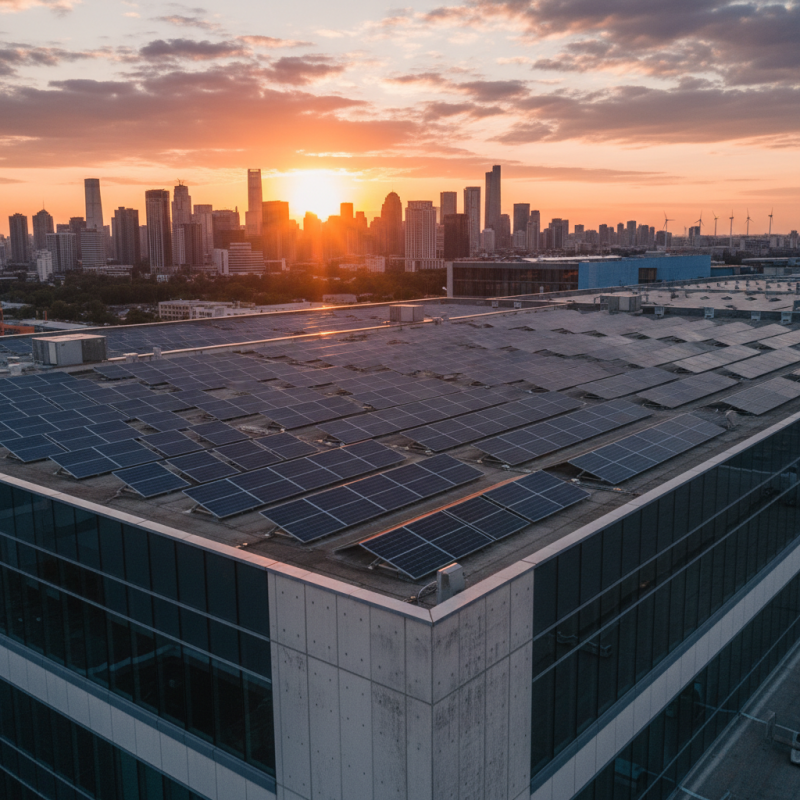
Commercial solar panels are large-scale solar energy systems designed for businesses and organizations. These panels convert sunlight into electricity, providing an eco-friendly energy source. Unlike residential panels, commercial systems often cover vast rooftops or land areas. They generate substantial power, suitable for high energy-consuming operations.
The design of commercial panels typically involves multiple solar cells arranged in a grid. This configuration maximizes efficiency and harnesses more sunlight. Companies often use these systems to reduce their energy bills and lower carbon footprints. However, installation and maintenance can be complex. Pain points may arise regarding initial costs and long-term planning.
When considering commercial solar panels, it's vital to assess energy needs and available space. Performance may vary based on location, weather, and panel quality. Potential buyers should seek reliable information before making decisions. Understanding both benefits and challenges is key to optimizing energy use. Responsible planning can lead to significant savings and benefit the environment.
Key Components of Commercial Solar Panels
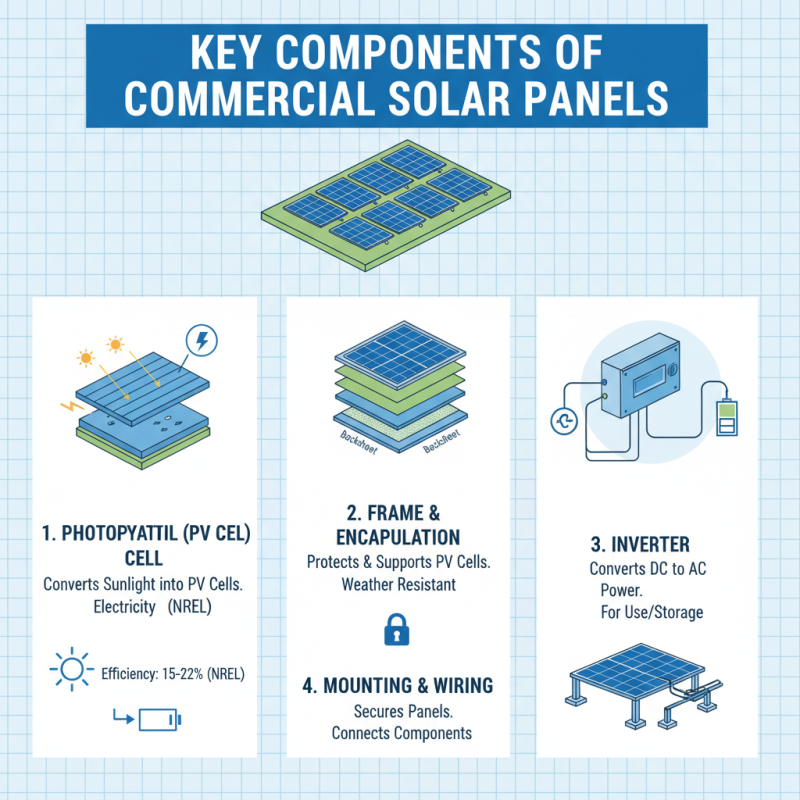
Commercial solar panels play a crucial role in harnessing solar energy for business use. They consist of several key components that facilitate energy conversion and storage. The primary element is the photovoltaic (PV) cell. These cells convert sunlight into electricity through the photovoltaic effect. According to the National Renewable Energy Laboratory, modern PV cells have an efficiency ranging from 15% to 22%. This means that a significant portion of sunlight is effectively transformed into usable energy.
In addition to PV cells, commercial solar panels also include an inverter. This device converts direct current (DC) electricity generated by PV cells into alternating current (AC), which is used by most business electrical systems. The choice of inverter can greatly influence energy efficiency. Some reports suggest that up to 10% of energy can be lost during the conversion process. Therefore, selecting high-quality inverters is vital for optimizing performance.
Other important components include mounting systems, which hold the panels in place, and batteries for storage. While batteries can enhance reliability, they may add complexity and cost. Additionally, maintenance of panels and system components can be a challenging aspect for businesses. Regular checks and cleaning are necessary to ensure optimal performance. Businesses must weigh these factors against the potential savings and environmental benefits that solar energy can provide.
How Commercial Solar Panels Generate Electricity
Commercial solar panels are designed to harness sunlight and convert it into usable electricity. These systems typically include photovoltaic (PV) cells that absorb sunlight and generate direct current (DC) electricity. This process is efficient and environmentally friendly, making solar energy a popular choice for businesses. According to the Solar Energy Industries Association, the solar market has grown by over 167% since 2010, showcasing the industry's rapid advancement.
The generated DC electricity is then converted into alternating current (AC) by an inverter, making it suitable for commercial use. Reports indicate that a commercial solar system can reduce electricity costs by 20-50%, depending on local utility rates and system size. However, businesses often face challenges. Initial costs can be significant, and installation may require extensive planning. Still, the long-term savings and sustainability benefits often outweigh these concerns.
Data from the National Renewable Energy Laboratory shows that large-scale solar projects can achieve power purchase agreements at competitive rates, sometimes as low as $30 per megawatt-hour. This highlights the potential for commercial solar panels to provide reliable electricity. However, many businesses hesitate to invest due to misconceptions or initial financial burdens. Overcoming these obstacles can lead to substantial energy savings and a positive environmental impact.
Advantages of Using Commercial Solar Panels
Commercial solar panels offer significant advantages for businesses aiming to reduce energy costs and environmental impact. Research indicates that utilizing solar energy can lead to a reduction in electricity bills by 20% to 50%. This makes solar panels a compelling choice for various types of companies, from small businesses to large corporations.
These panels harness sunlight to generate electricity, promoting sustainability. According to the U.S. Department of Energy, commercial solar installations have increased by over 400% in the last decade. This rapid growth illustrates a growing recognition of the benefits. They lower dependence on traditional energy sources, which can be volatile in price.
Despite the clear advantages, there are challenges. Initial installation costs can be high. Some companies may hesitate due to financing concerns or a lack of understanding. However, the long-term savings often outweigh these concerns. Many states offer incentives and grants. Exploring these options can ease the transition. Energy independence is not just a trend; it’s a necessity.
Factors Influencing the Efficiency of Commercial Solar Panels
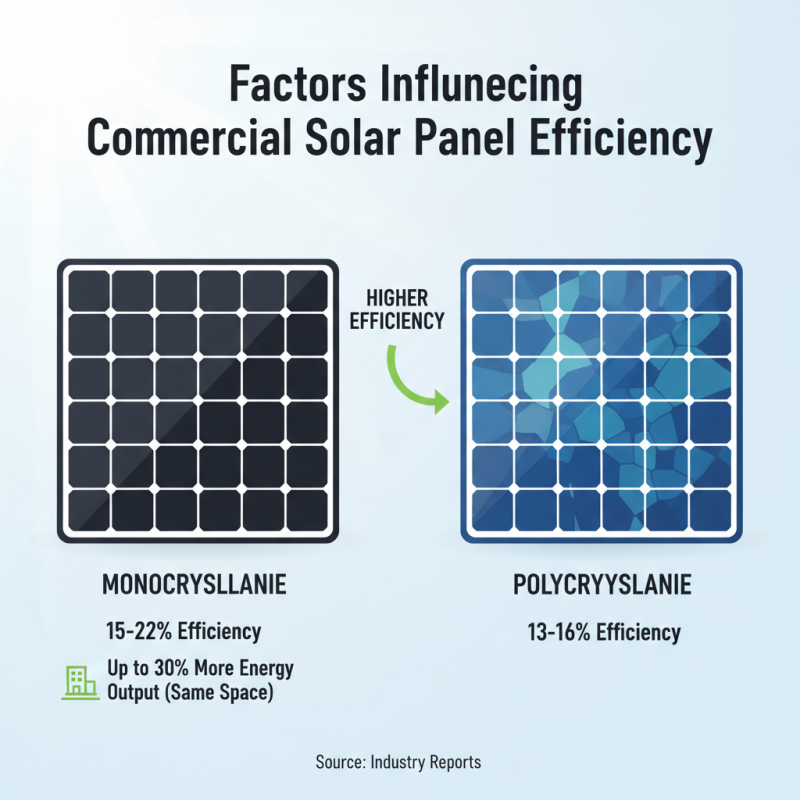
The efficiency of commercial solar panels hinges on several crucial factors. One of the most significant is the type of solar cells used. For instance, monocrystalline panels typically offer higher efficiency, averaging around 15-22%, compared to polycrystalline at 13-16%. This variance can dramatically impact energy output. Reports indicate that monocrystalline systems can produce up to 30% more energy in the same space, making them preferable for space-constrained installations.
Another key factor is the orientation and angle of the solar panels. Proper alignment towards the sun can increase efficiency by 20%. Studies show that the optimal angle usually ranges from 30 to 45 degrees, depending on geographical location. Additionally, shading from nearby structures or trees can severely limit performance. Even a small shadow can reduce energy production by 60%, highlighting the need for careful site assessment prior to installation.
Temperature also plays a role in efficiency. Solar panels lose about 0.5% efficiency for every degree Celsius increase in temperature above 25°C. This means that in hotter climates, energy output may decrease significantly. Understanding these elements is essential for maximizing the return on investment in commercial solar systems.